
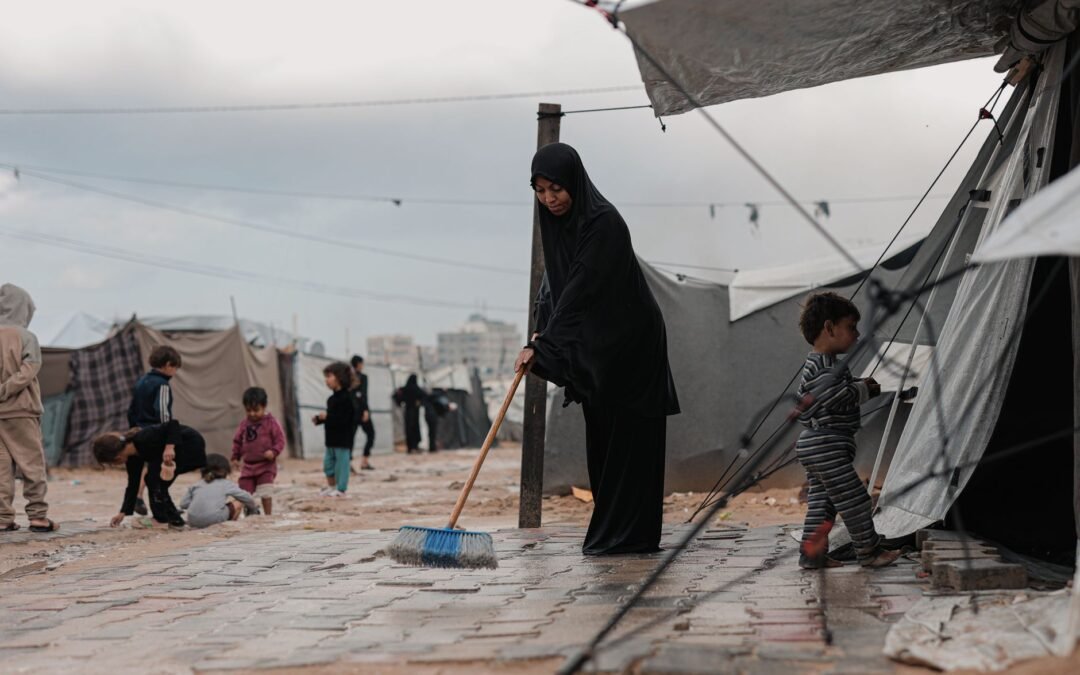
As climate change continues to alter global landscapes, it has given rise to a new category of migrants known as climate change refugees. This article delves into the statistics and trends surrounding climate change refugees, providing insights for policymakers, researchers, and concerned citizens. By understanding these patterns, stakeholders can better prepare and respond to the challenges posed by climate-induced migration.
The focus will be on the current data, the impact of climate change on refugee patterns, and how countries, especially Canada, are addressing these issues. This article is essential for anyone interested in the intersection of environmental changes and human migration.
Key Facts
- According to the United Nations High Commissioner for Refugees (UNHCR), an estimated 21.5 million people have been displaced annually due to climate-related events since 2026.
- The Internal Displacement Monitoring Centre reported that in 2026, weather-related events displaced approximately 30.7 million people worldwide.
- Canada does not currently recognize climate change as a standalone reason for refugee status under its immigration laws.
- In 2026, the World Bank estimated that by 2050, climate change could displace over 143 million people in Sub-Saharan Africa, South Asia, and Latin America.
- The Global Compact on Refugees, adopted in 2026, highlights the need to address climate-induced displacement through international cooperation.
The Impact of Climate Change on Refugee Patterns
Climate change is a significant driver of migration, as rising sea levels, extreme weather events, and changing agricultural patterns force communities to relocate. These environmental shifts disrupt livelihoods, leading to increased migration from affected regions. For instance, island nations in the Pacific are experiencing rising sea levels that threaten their very existence, prompting residents to seek refuge in other countries.
In Canada, the effects of climate change are evident in the increasing number of people migrating from areas prone to natural disasters. The country is witnessing a rise in applications for asylum from individuals fleeing climate-related crises. However, the current legal framework does not recognize climate change as a valid reason for refugee status, posing challenges for those seeking protection.
The situation is further complicated by the intersection of climate change with other socio-economic factors. Areas already struggling with poverty, political instability, or conflict are particularly vulnerable to climate-induced migration. This complexity requires comprehensive policies that address both environmental and social dimensions of migration.
Real-world examples highlight the urgency of addressing climate-induced migration. In 2026, Cyclone Idai displaced thousands in Mozambique, Zimbabwe, and Malawi. The disaster underscored the need for international assistance and coordinated responses to mitigate the impact of such events.
Comparatively, countries like Germany and New Zealand have begun to explore legal avenues to accommodate climate refugees, recognizing the growing need for adaptive immigration policies. Canada’s approach, while cautious, is evolving as it considers the implications of climate change on its immigration system.
Canada’s Response to Climate-Induced Migration
Canada’s immigration policies are gradually adapting to the realities of climate change. While climate change is not yet a recognized ground for refugee status, there is increasing awareness and discussion around the need to integrate environmental factors into immigration policies. The country has been involved in international dialogues, such as the Global Compact on Refugees, which emphasize the importance of addressing climate-induced displacement.
In 2026, the Canadian government launched the Climate Action and Awareness Fund, which aims to support projects that address climate change impacts, including those related to migration. This initiative reflects Canada’s recognition of the need to address climate change comprehensively, including its effects on human mobility.
Practical implications for immigrants are significant. As climate change continues to impact global migration patterns, prospective immigrants and refugees must navigate an evolving legal landscape. Understanding Canada’s policies and potential changes can help individuals and families plan their migration strategies effectively.
Common misconceptions about climate-induced migration include the belief that it is a temporary issue. However, as climate change progresses, its impact on migration is expected to intensify, requiring long-term solutions and adaptive policies.
Real-World Examples of Climate Refugees
The plight of climate refugees is a pressing global issue, with numerous real-world examples illustrating the challenges faced by affected communities. In Bangladesh, rising sea levels have led to significant land loss, forcing thousands to relocate inland. This internal displacement strains resources and infrastructure, highlighting the need for sustainable solutions.
In the Pacific Islands, entire nations face the threat of submersion due to rising sea levels. Countries like Tuvalu and Kiribati have been at the forefront of international advocacy, calling for urgent action to address the existential threat posed by climate change.
These examples underscore the need for international cooperation and support for climate-affected regions. While some countries have started to offer pathways for climate refugees, a comprehensive global response is essential to address the scale of the challenge.
Canada’s role in supporting climate refugees can be seen through its participation in international agreements and its commitment to humanitarian assistance. By providing aid and advocating for climate action, Canada contributes to global efforts to mitigate the impact of climate change on vulnerable populations.
Comparisons with other countries reveal varying levels of commitment to addressing climate-induced migration. While New Zealand has taken steps to recognize climate refugees, many countries, including Canada, are still in the process of evaluating and adapting their policies to address this emerging issue.
Challenges and Opportunities in Addressing Climate Refugees
Addressing the needs of climate refugees presents both challenges and opportunities for countries like Canada. One of the primary challenges is the lack of legal recognition for climate refugees under international law. This gap leaves many displaced individuals without adequate protection or support.
Opportunities arise from the potential to develop innovative policies and frameworks that integrate climate considerations into migration strategies. By recognizing the link between climate change and migration, countries can create more resilient and adaptive systems that respond to the needs of affected populations.
Practical implications for policy development include the need for comprehensive data collection and analysis to understand migration patterns and predict future trends. This information is crucial for designing effective interventions and support mechanisms for climate refugees.
Common misconceptions about climate-induced migration include the belief that it primarily affects developing countries. However, climate change is a global issue that impacts all nations, necessitating a coordinated international response.
Real-world examples of successful adaptation strategies can provide valuable lessons for policymakers. For instance, the Netherlands has implemented innovative flood management techniques that could inform similar efforts in other regions facing climate-related challenges.
People Also Ask
What is a climate change refugee?
A climate change refugee is an individual who is forced to leave their home due to the adverse effects of climate change. These effects include rising sea levels, extreme weather events, and changing agricultural conditions that make it difficult to sustain livelihoods. Unlike traditional refugees, climate change refugees are not yet recognized under international law, which complicates their ability to seek asylum and protection. As climate change continues to impact global migration patterns, the need for legal recognition and support for climate refugees is becoming increasingly urgent.
How does climate change affect migration patterns?
Climate change affects migration patterns by altering the environmental conditions that sustain communities. Rising sea levels, increased frequency of natural disasters, and shifts in agricultural productivity force individuals and families to relocate in search of safer and more stable environments. These changes often result in internal displacement within countries, but can also lead to cross-border migration when local resources are insufficient to support displaced populations. Understanding these patterns is crucial for developing effective policies and support systems for climate-induced migration.
What steps is Canada taking to address climate refugees?
Canada is gradually recognizing the impact of climate change on migration and is taking steps to address the needs of climate refugees. While climate change is not yet a standalone reason for refugee status, Canada is involved in international discussions and agreements that emphasize the importance of addressing climate-induced displacement. Initiatives such as the Climate Action and Awareness Fund support projects that mitigate climate impacts, including those related to migration. As the issue gains prominence, Canada is likely to continue adapting its policies to better accommodate climate refugees.
Are there any legal protections for climate refugees?
Currently, there are no specific legal protections for climate refugees under international law. The 1951 Refugee Convention does not recognize climate change as a valid reason for refugee status, leaving many displaced individuals without formal protection. However, there is growing advocacy for the recognition of climate refugees and the development of legal frameworks to support them. Some countries, such as New Zealand, have begun to explore pathways for climate refugees, but a comprehensive global response is necessary to address the scale of the challenge effectively.
How can countries prepare for climate-induced migration?
Countries can prepare for climate-induced migration by integrating climate considerations into their national migration policies and frameworks. This involves collecting and analyzing data on migration patterns, developing adaptive infrastructure, and providing support for affected communities. International cooperation and knowledge-sharing are essential for designing effective strategies that address the needs of climate refugees. By recognizing the link between climate change and migration, countries can create more resilient systems that respond to the challenges posed by environmental changes.
Key Takeaways
- Climate change is a significant driver of global migration, with millions displaced annually due to environmental factors.
- Canada does not currently recognize climate change as a valid reason for refugee status, posing challenges for climate refugees seeking asylum.
- International cooperation and innovative policy development are essential for addressing the needs of climate-induced migrants.
- Real-world examples, such as the displacement caused by Cyclone Idai, highlight the urgency of addressing climate-induced migration.
- Countries like New Zealand are exploring legal pathways for climate refugees, setting examples for others to follow.
In conclusion, understanding climate change refugee statistics and trends is crucial for developing effective policies and support systems. As climate change continues to impact global migration patterns, countries must adapt their immigration frameworks to address the needs of climate refugees. By recognizing the link between environmental changes and human mobility, stakeholders can create more resilient and adaptive systems that respond to the challenges posed by climate-induced migration. For more information on Canada’s immigration policies, consider visiting the official Immigration, Refugees and Citizenship Canada (IRCC) website.